Watch the work
Before designing, we map activities, tools and responsibilities. We want to know where work slows down and why.

We observe how professionals work. From there, we build clear, dependable products that reduce everyday complexity.
Discover our approachWe listen for needs that recur at work, even across very different settings. We study them, choose where we can make a real difference and turn them into independent products designed to last.
Before designing, we map activities, tools and responsibilities. We want to know where work slows down and why.
Repeated steps, scattered information and disconnected tools point to a concrete problem we can address.
We put the solution in the hands of the people who will use it. A feature stays only when it makes work simpler or safer.
Frequent tasks should be easy to recognise and take few steps. Labels, action order and feedback help people move forward without having to consult instructions.
Software should preserve work correctly, show what is happening and handle errors, lost connections and updates without leaving people uncertain.
We collect only necessary data, limit access and permissions, and review dependencies. Protecting information is part of the architecture, not a final addition.

Events, repertoire and files. All in harmony.
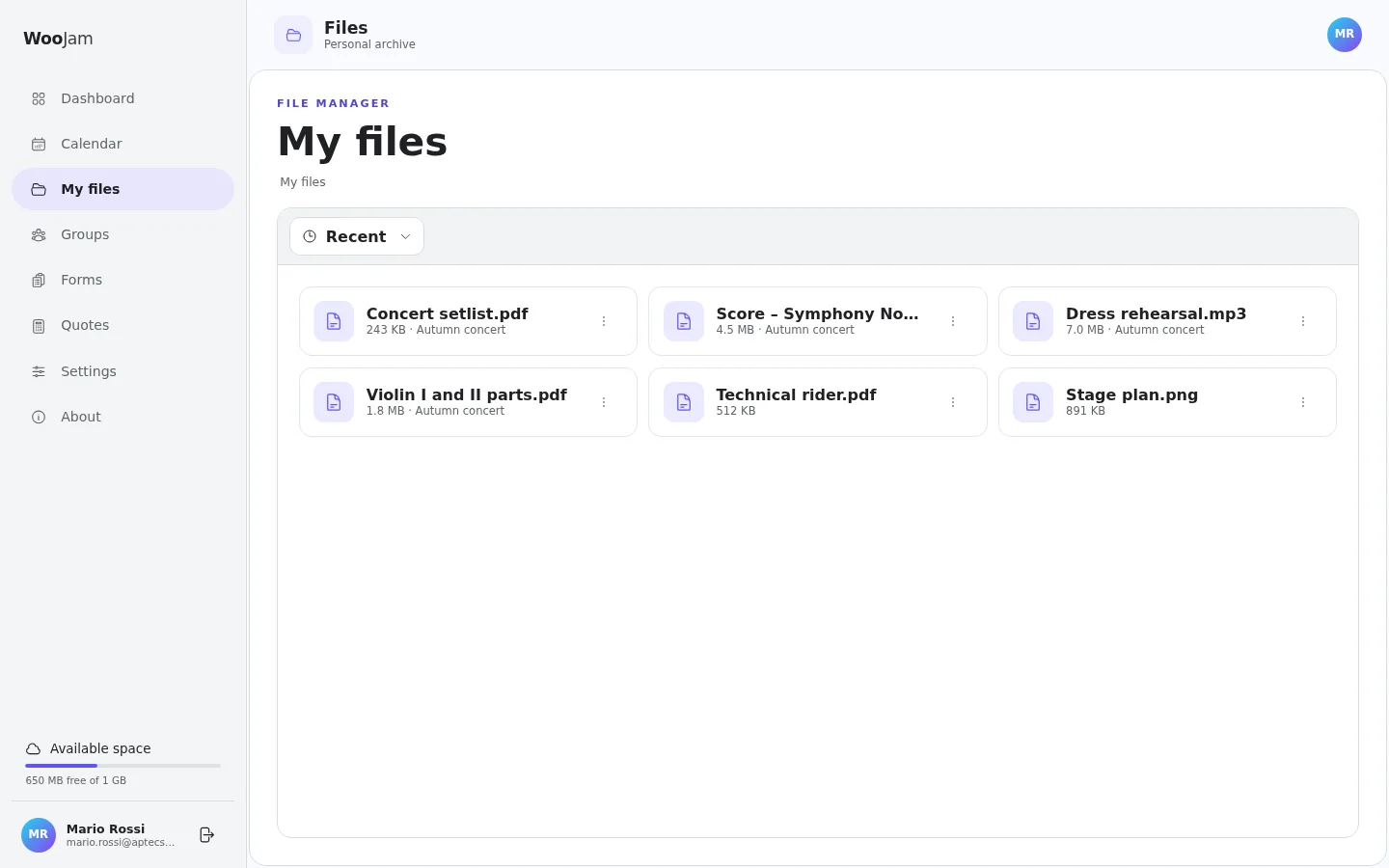
The workspace for musicians, bands and orchestras. It brings together calendar, scores, quotes and client requests, shared with the people you play with and available even without a connection.
Go to WooJam(opens in a new window)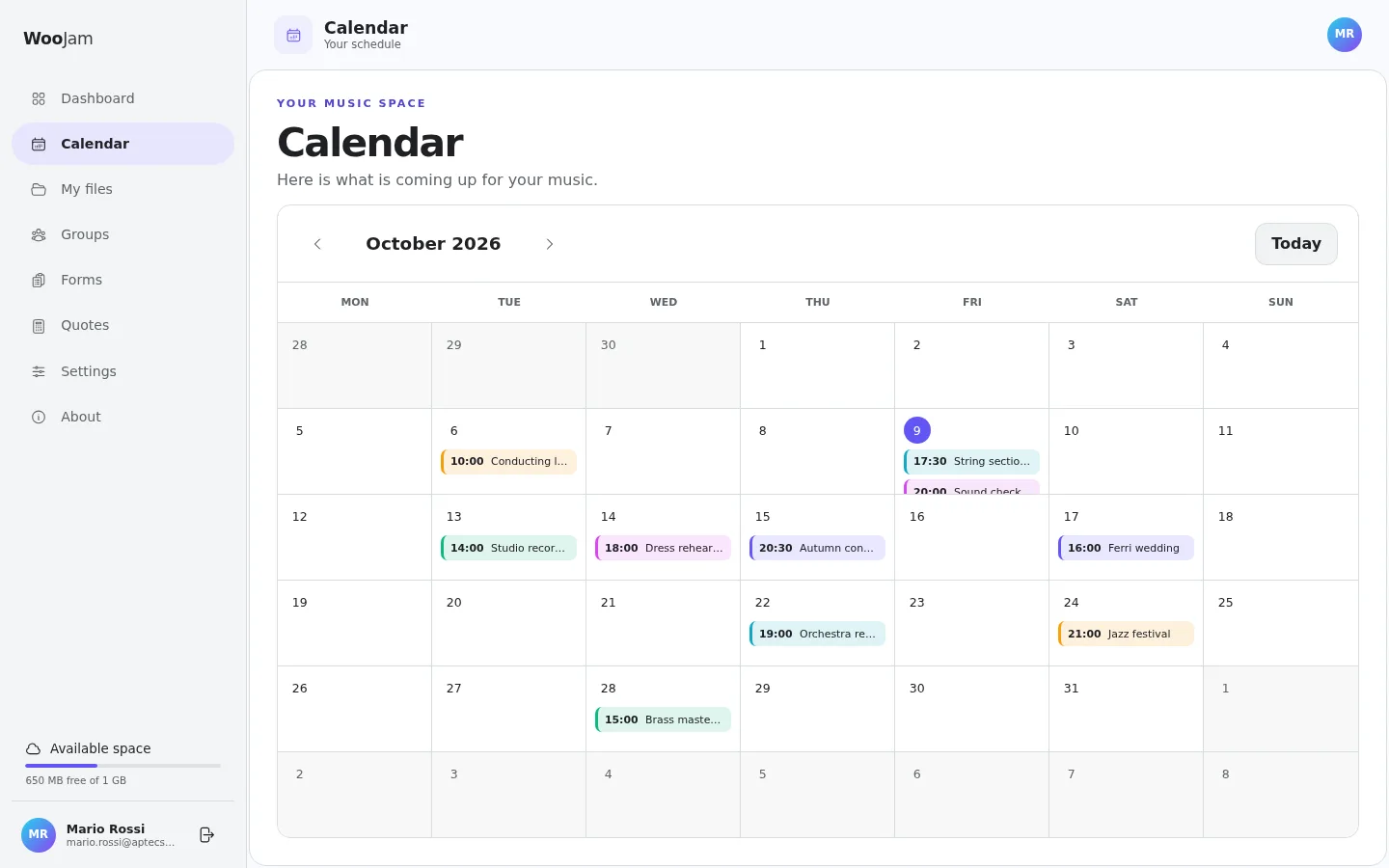
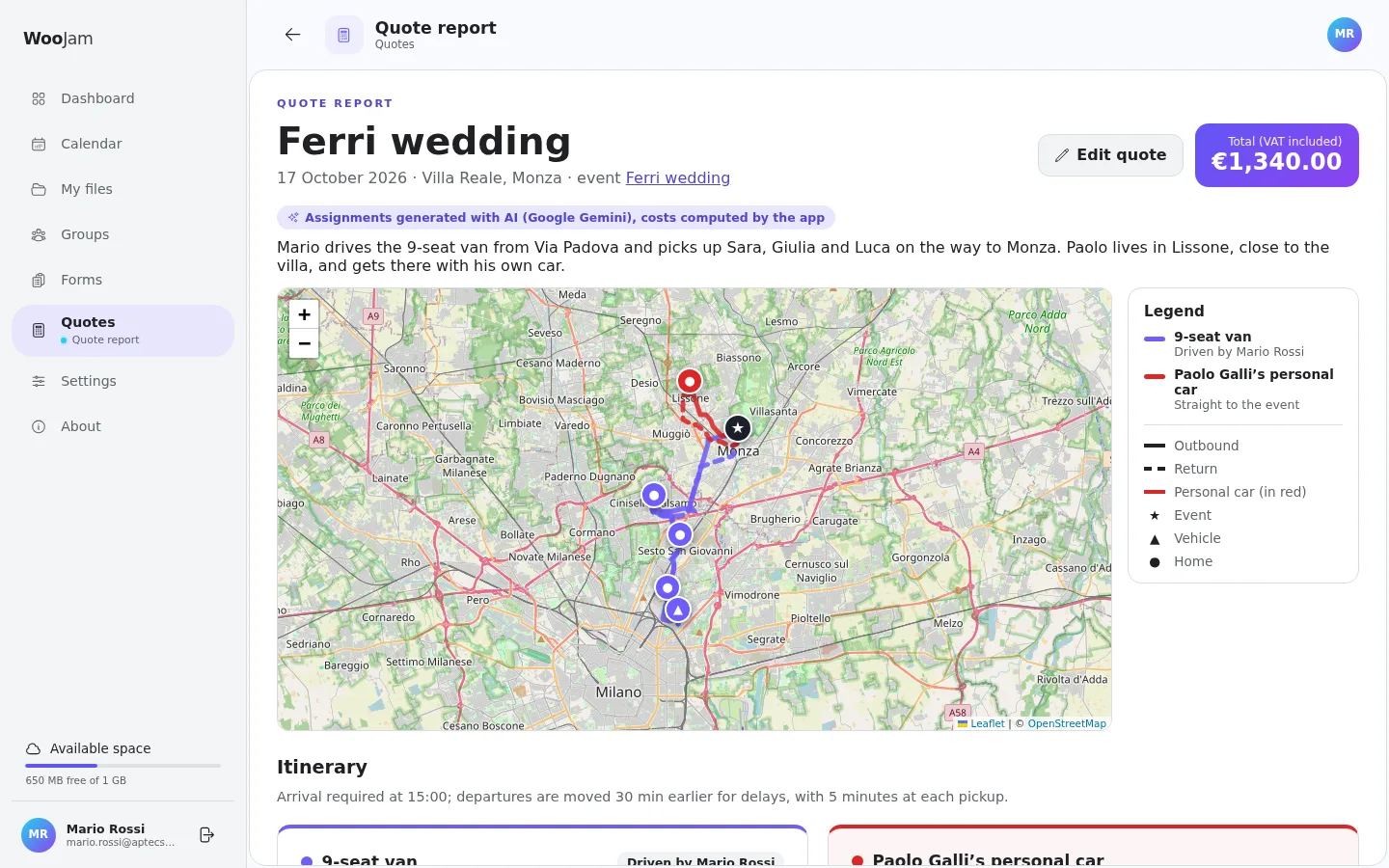
Everyday use, recurring errors and changes in working habits show where a product needs to improve. These signals guide focused changes that remain consistent with the product and the work of the people using it.
Back to the top